
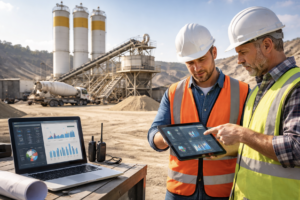
Concrete production has always depended on timing, consistency, equipment reliability, and communication. Today, those same priorities are being strengthened by smarter IT. For producers, contractors, and plant leaders looking at South Dakota Concrete Batching Plants, the conversation is no longer limited to mixers, silos, and dispatch schedules. It now includes data visibility, cybersecurity, connected equipment, remote access, AI-supported decision-making, and the digital systems that help operations stay productive under pressure. The rise of the industrial internet of things has made it easier for industrial operations to connect machines, sensors, and software in ways that improve uptime, responsiveness, and performance.
Why Smarter IT Matters More in Concrete Production
Concrete batching plants operate in an environment where small delays can quickly turn into expensive problems. Material shortages, moisture variation, calibration issues, truck timing, weather impacts, plant downtime, and communication gaps can affect quality and profitability in the same day. Smarter IT helps reduce that exposure by making information more visible and easier to act on. Instead of relying only on manual reporting, disconnected spreadsheets, or calls between the office and the yard, better systems can bring plant data, scheduling, maintenance, inventory, and production tracking into a more connected workflow. The broader smart-manufacturing movement continues to emphasize digital investment as a driver of agility and competitiveness, especially as industrial companies adopt more connected and AI-enabled operations.
That matters in South Dakota because batching plants often serve projects where reliability is everything. Road work, municipal development, commercial builds, agricultural infrastructure, and energy-related construction all depend on concrete arriving on time and meeting spec. A plant that can see problems sooner, communicate faster, and protect critical systems better holds a meaningful operational advantage. Smarter IT does not replace plant knowledge. It strengthens it by giving experienced teams better tools to manage complexity and react with confidence. Industry sources from Deloitte’s 2026 Manufacturing Industry Outlook and Microsoft’s Industry 4.0 technologies overview both point to digital systems, AI, IoT, and connected operations as core parts of modern industrial competitiveness.
Connected Operations Create Better Visibility
One of the clearest advantages of smarter IT is visibility. Plant managers need to know what is happening now, not after the shift ends. Connected systems can help track batch performance, aggregate flow, production status, maintenance alerts, fleet movement, and inventory levels in closer to real time. That visibility can support better decisions across dispatch, quality control, maintenance, and customer communication.
For concrete batching plants, visibility also helps reduce friction between the field and the office. When delivery schedules, load counts, plant output, and service notes are easier to access, teams spend less time chasing information and more time solving real issues. This is where smarter IT becomes practical rather than theoretical. It is not about adding technology for appearance. It is about eliminating blind spots that create rework, delay, and waste. Cisco on Industrial IoT describes IIoT as an ecosystem that collects, monitors, and analyzes operational data to improve visibility, troubleshooting, efficiency, safety, and security. That definition fits concrete operations extremely well.
Cybersecurity Is Now Part of Operational Stability
A modern batching plant is no longer just a physical operation. It is also a digital environment with networked devices, industrial controls, remote connections, and business systems that need protection. That makes cybersecurity part of operational stability, not just an IT department concern. When a plant depends on connected software, dispatch platforms, cloud dashboards, vendor access, or industrial controls, weak cybersecurity can become a production risk.
This is why smarter IT must include secure architecture, access controls, network segmentation, backups, update discipline, and a plan for incident response. The NIST Cybersecurity Framework 2.0 is widely used to help organizations understand, assess, prioritize, and communicate cybersecurity risk, and CISA Secure by Design emphasizes building security into technology from the start rather than bolting it on later. Those principles are highly relevant to industrial businesses that cannot afford system disruption during active production windows.
For South Dakota plant operators, this means smarter IT should be evaluated not only by convenience, but by resilience. A fast dashboard is helpful. A secure, reliable, recoverable system is far more valuable. IT decisions that support production continuity, protect records, and reduce exposure to cyber events can quietly protect revenue and reputation at the same time. Cisco’s current industrial security materials also emphasize OT visibility, segmentation, and zero-trust-style remote access as key elements of industrial protection.
AI and Automation Support Better Decision-Making
AI in industrial settings is often misunderstood as a futuristic add-on. In reality, its strongest value often comes from very practical use cases: pattern detection, predictive maintenance, anomaly identification, quality monitoring, scheduling support, and faster interpretation of operational data. In a batching environment, those capabilities can support more proactive maintenance planning, tighter production awareness, and stronger responses to emerging issues before they become shutdowns or costly inconsistencies.
That does not mean every plant needs a complex AI stack overnight. It means smarter IT should be built with enough structure to support better analysis over time. Clean data, connected systems, and usable dashboards create the foundation. Then more advanced tools can help turn that data into action. IBM on AI in manufacturing explains that AI is helping manufacturers improve efficiency, precision, and adaptability, while IBM’s smart manufacturing overview highlights the role of real-time data analysis in understanding production performance. Those ideas translate directly to a plant environment where timing, consistency, and uptime matter every day.
For plant leaders, the takeaway is simple: smarter IT creates a stronger operating picture. AI and automation then help make that picture more useful. The goal is not complexity. The goal is better control.
Smarter IT Helps People Work Better, Not Just Systems
A concrete batching plant succeeds because people know how to keep work moving. The right IT structure helps those people do that with less friction. Dispatch teams benefit from clearer scheduling and better communication. Operators benefit from cleaner data and easier monitoring. Ownership benefits from stronger reporting, reduced downtime, and better insight into operational performance. Customers benefit from more consistency and confidence.
This human side of smarter IT is often overlooked. Technology should reduce guesswork, reduce duplication, and reduce delays in communication. It should make teams feel more supported, not more buried. Microsoft’s recent manufacturing reporting on IoT and AI adoption points to secure, scalable, automated shop-floor environments as a growing priority, while Deloitte’s smart-manufacturing research continues to frame digital transformation as an operational and workforce challenge, not just a software purchase.
That perspective matters for South Dakota businesses because many industrial operations need practical solutions that fit the way real work gets done. The smartest IT strategy is usually the one that improves clarity, protects continuity, and supports the team already doing the job.
The Competitive Advantage Is in Integration
The real power of smarter IT is not found in one single tool. It comes from integration. When maintenance, production data, inventory awareness, dispatch coordination, reporting, and cybersecurity work together, a plant can operate with more confidence and less confusion. That kind of connected environment supports stronger planning and faster response times. It also creates a more professional operational backbone for growth.
For producers evaluating long-term improvements, this is where IT becomes a strategic asset instead of a support function in the background. Better integration can help plants scale without losing visibility. It can help leadership spot inefficiencies earlier. It can help teams move from reactive problem-solving to more disciplined operations. In a demanding market, that kind of shift matters.
The broader smarter IT landscape keeps moving in this direction. Industry resources from Microsoft, Cisco, IBM, NIST, CISA, and Deloitte all point toward a future where industrial businesses perform better when digital systems are connected, secure, and designed to support real operational outcomes.
Conclusion
South Dakota concrete producers do not need technology for technology’s sake. They need systems that help them run tighter operations, protect uptime, improve visibility, and support reliable service. That is the real role of smarter IT. It brings better awareness to daily operations, supports stronger cybersecurity, opens the door for practical automation, and helps teams make faster, better-informed decisions.
As the industrial world becomes more connected, concrete batching plants that invest in smarter IT will be better positioned to serve customers, manage risk, and operate with greater consistency. In that sense, smarter IT is not separate from plant performance. It is becoming one of the most important forces behind it.