
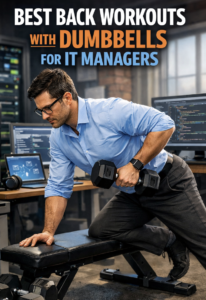
Long hours at a desk, constant context-switching, and the quiet stress of keeping systems stable can take a real toll on an IT manager’s body. A strong back is not about aesthetics; it is about resilience. It supports posture during endless meetings, keeps shoulders from rolling forward over a keyboard, and helps reduce the nagging tightness that tends to collect between the shoulder blades after a day of escalations and Slack pings.
Dumbbells are a perfect fit for the IT lifestyle because they are practical, scalable, and efficient. They let you train your back at home or in a small gym without fighting for machines, and they build the exact kind of strength that carries over to real life: controlled pulling, stable shoulders, and a spine that stays supported when your schedule gets messy. Along the way, staying aware of what’s happening across the tech landscape can help you pair training with better work habits and ergonomics, so it makes sense to keep a few reliable IT news sources in your rotation like CIO, Computerworld, InfoWorld, Ars Technica, and The Verge. For a quick foundational refresher on the scope of the field you lead every day, Information technology is a solid reference.
What Makes a Dumbbell Back Workout “Best” for IT Managers
The best plan is the one that fits into real life and produces consistent results without draining your nervous system. For most IT managers, that means a workout that improves posture, strengthens the upper back and lats, and reinforces safe hinging mechanics for the low back—all while staying time-efficient.
A smart back workout for desk-heavy days prioritizes movements that pull the shoulders down and back, train the mid-back to stabilize the shoulder blades, and build lats that support your torso like built-in scaffolding. It also respects recovery, because leadership is already a cognitive load. Your training should make you feel more capable, not more depleted. ✅
The Core Dumbbell Back Exercises That Deliver the Most Results
The exercises below cover the back from top to bottom. They do not require a bench in every case, and they scale easily by adjusting weight, tempo, and volume.
1) One-Arm Dumbbell Row (supported)
This is the backbone of dumbbell back training. Support one hand on a bench, chair, or sturdy surface, and row the dumbbell with the other arm. Drive the elbow toward your hip, pause briefly near the top, and lower with control. This trains lats, mid-back, and grip while keeping the movement stable and joint-friendly.
2) Two-Arm Dumbbell Row (hinged)
A hinged row builds a stronger “workhorse” back. Hinge at the hips, keep the spine neutral, and row both dumbbells toward the lower ribs. This reinforces a strong posterior chain while loading the back in a way that carries into daily movement patterns.
3) Dumbbell Romanian Deadlift (RDL)
This is not a row, but it is essential for the back because it trains the hinge and strengthens hamstrings and glutes, which support the low back. Move slowly, push the hips back, keep dumbbells close to your legs, and stop when you feel a strong hamstring stretch without rounding your spine.
4) Dumbbell Pullover (floor or bench)
A pullover trains lats and upper back while opening up the ribcage and shoulders—excellent for desk posture. Lie on the floor or bench, hold one dumbbell with both hands, lower it behind the head with control, and pull it back overhead while keeping ribs from flaring.
5) Rear Delt Fly (hinged)
Rear delts and upper back are posture insurance. Hinge, keep a slight bend in the elbows, and sweep the dumbbells outward. Light weight and strict control win here.
6) Dumbbell Shrug (with a pause)
This helps build upper traps and neck support. Shrug straight up, pause at the top for a second, then lower slowly. The pause keeps it honest and builds stability where many desk workers feel tension.
Two “Best” Dumbbell Back Workouts Built for IT Schedules
Below are two options: a concise 30–35 minute plan and a slightly longer strength-focused plan. Both are built to be repeatable and sustainable.
Workout A: The 30–35 Minute Back Builder for Busy Weeks 🔥
Warm-up (4–5 minutes)
Do brisk shoulder circles, slow hip hinges with hands on hips, and a few controlled bodyweight “good mornings.” Move blood into shoulders and hips.
1) One-Arm Dumbbell Row (supported)
3 sets × 10–12 reps each side
Use a controlled lower, and pause near the top for half a second.
2) Dumbbell Romanian Deadlift
3 sets × 8–10 reps
Keep it smooth and hinge-focused. The goal is posterior-chain strength without back strain.
3) Rear Delt Fly (hinged)
3 sets × 12–15 reps
Use lighter weights and make it strict. This is posture work, not ego work.
4) Dumbbell Pullover (floor or bench)
2–3 sets × 10–12 reps
Slow, controlled reps, steady breathing, no rushing.
Finisher: Dumbbell Shrug (pause reps)
2 sets × 12 reps with a 1-second pause at the top
This locks in upper-back endurance after a long desk day.
This workout hits lats, mid-back, rear delts, and hinge strength with minimal setup, making it ideal when your calendar looks like a patchwork of meetings and urgent asks.
Workout B: The Strength + Posture Plan for Maximum Carryover 💪
Warm-up (5–6 minutes)
Add a few slow bodyweight hinges plus light rows or flys if you have smaller dumbbells available.
1) Two-Arm Dumbbell Row (hinged)
4 sets × 6–10 reps
Go heavier than Workout A. Maintain a strict hinge and neutral spine.
2) One-Arm Dumbbell Row (supported)
3 sets × 8–10 reps each side
Focus on a strong pull and controlled lowering to build dense back strength.
3) Dumbbell Romanian Deadlift
4 sets × 6–8 reps
Moderately heavy, crisp reps. Stop before form breaks.
4) Rear Delt Fly (hinged)
3 sets × 12–15 reps
Keep shoulders down and away from the ears.
5) Dumbbell Pullover
3 sets × 8–12 reps
Use a weight that lets you keep ribs controlled and lats engaged.
Optional: Farmer Carry (if space allows)
3 rounds × 30–60 seconds walking with heavy dumbbells
This adds grip, upper-back stability, and core bracing—perfect for durability.
Workout B is the best fit when you want a stronger back that improves posture and performance under stress, without turning training into another full-time job.
Progression That Works Without Overthinking 🧠
Progression should be simple. Pick one method for two to four weeks, then rotate.
-
Add 1–2 reps per set until you hit the top of the rep range, then increase weight slightly.
-
Slow the lowering phase to 3 seconds for rows and flys when weights are limited.
-
Add one extra set to rows or RDLs on weeks you feel recovered.
The win is consistency. In IT leadership, small improvements compounded over time create major outcomes. Training works the same way.
Form Cues That Protect Your Back During High-Stress Weeks
A great back workout is only “best” if it is safe and repeatable.
-
Keep your ribcage stacked over your pelvis during hinges and rows.
-
Pull with elbows and back, not with neck and momentum.
-
Use controlled lowering on every rep, especially on rows and flys.
-
Stop sets with 1–2 reps left in the tank when sleep is short.
This approach builds strength without leaving you wrecked for the workday.
Conclusion ✅
The best back workouts with dumbbells for IT managers are the ones that strengthen posture, build real pulling power, and fit inside a demanding schedule. A combination of rows, RDLs, pullovers, rear delt flys, and shrugs gives you full-back coverage with minimal equipment, and the two workout options above make it easy to train whether you have 30 minutes or a full session.
A stronger back supports clearer focus, steadier energy, and a body that feels capable even when the queue is not. Keep your training consistent, keep your form clean, and keep your leadership strong—inside the office and outside it. 💻🏋️♀️